
Upstream processing
Common problems
From small molecule APIs to enzymes, we improve yield, stability and performance by bringing insights to every step in USP
Upstream processes in industries such as APIs, nutraceuticals, cosmetics, enzymes, and sugars often involve complex chemistries or biological systems that create significant challenges for productivity, safety, or scalability. These issues can lead to low yields, high variability between batches, and inefficient resource use. Typical problems include:
Our solutions
Ypso-Facto helps manufacturers tackle upstream challenges by combining process expertise with advanced modeling and simulation tools. We analyze reaction pathways, identify critical process parameters, and design optimized operating strategies that improve yield, safety, and scalability. Our approach reduces trial and error and supports the transition from batch to continuous processes when beneficial.
How we add value:
Case studies
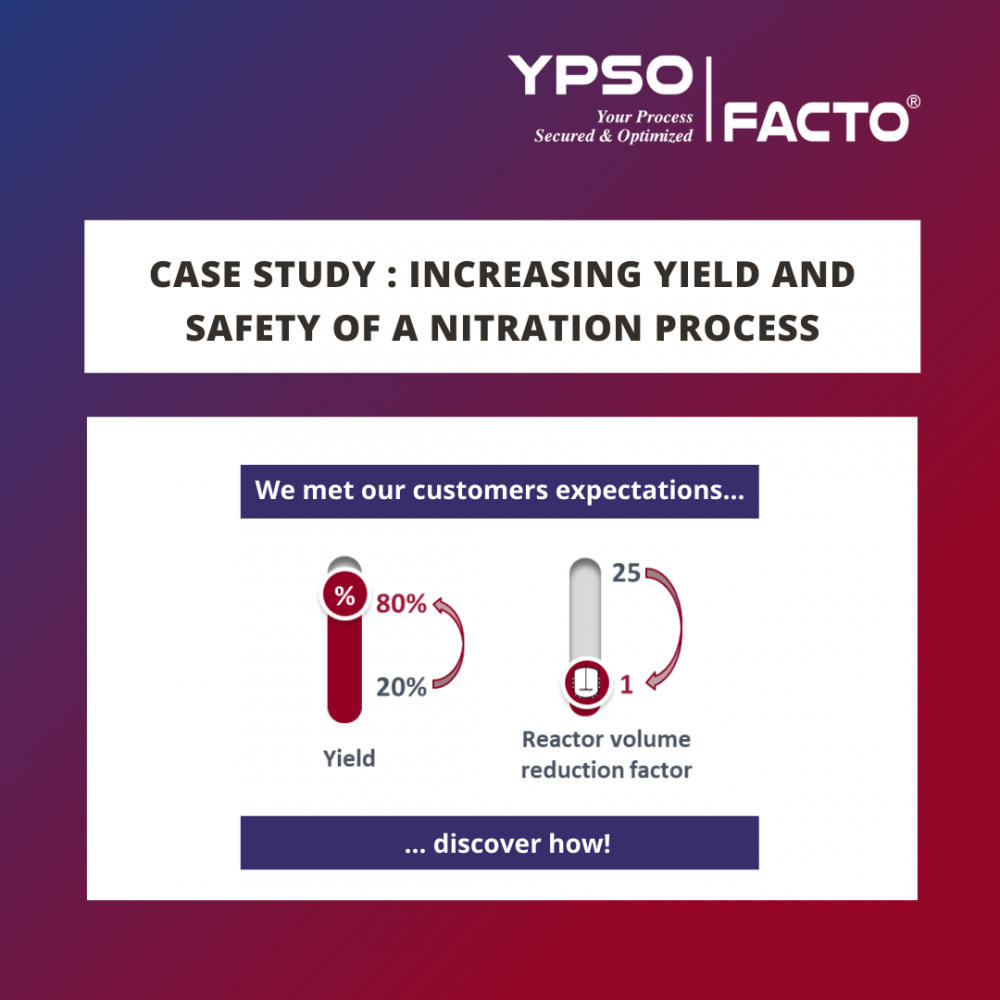
Challenge: A 40-year-old nitration process for the production of an Active Pharmaceutical Ingredient was highly complex, with low selectivity and yield of the target product. The objective was to enhance competitiveness and improve safety.
Methods:
- Analysis of existing performance and identification of the reaction pathway.
- Predictive simulations coupling mass and heat transfer to understand process limitations.
- Reduction of impurity formation by optimizing the sequence of reactant loading and integrating reactive distillation into the process.
Achievements:
- Yield improved by a factor of four.
- Safety significantly enhanced by drastically reducing reactor size and implementing a continuous tubular reactor design.
- Reduction of downstream process complexity from over 30 process steps to less than 10 through upstream improvements
Key message: Combining mechanistic modeling with process redesign can dramatically improve both performance and safety in legacy chemical processes.
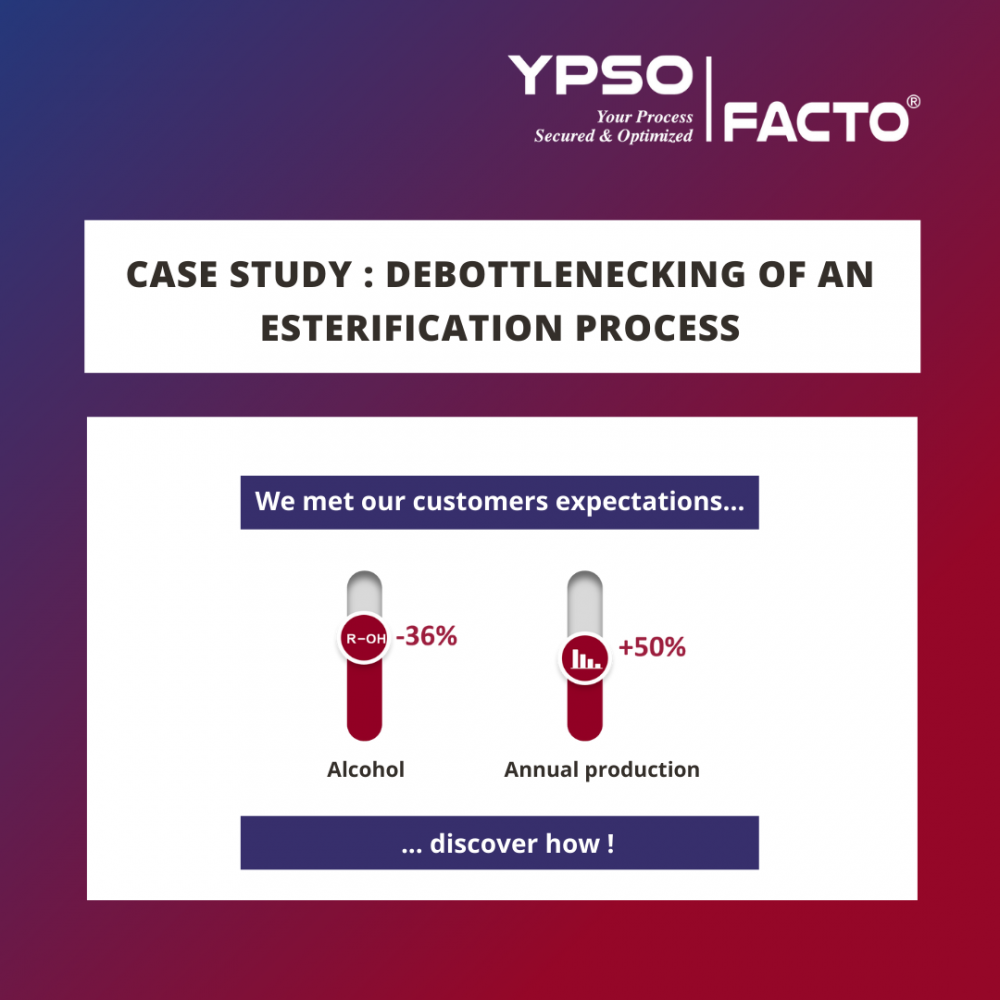
Challenge: An established process (>40 years) for the production of an ester faced significant bottlenecks. The goal was to improve operating economics (OpEx) while minimizing investment.
Methods:
- Identification of the reaction pathway through targeted experiments.
- Development of a mechanistic model accounting for complex phase equilibria (gas/liquid/solid phases at the same time).
- Use of predictive simulations to determine optimal operating conditions.
Achievements:
- Successful design of a continuous stirred tank unit ensuring optimal reaction conditions (homogeneous liquid phase).
- More than 50% increase in annual production capacity.
- Significant reduction in raw material consumption and waste generation.
Key message: Mechanistic modeling can unlock hidden potential in legacy processes, enabling higher productivity and sustainability with minimal investment.
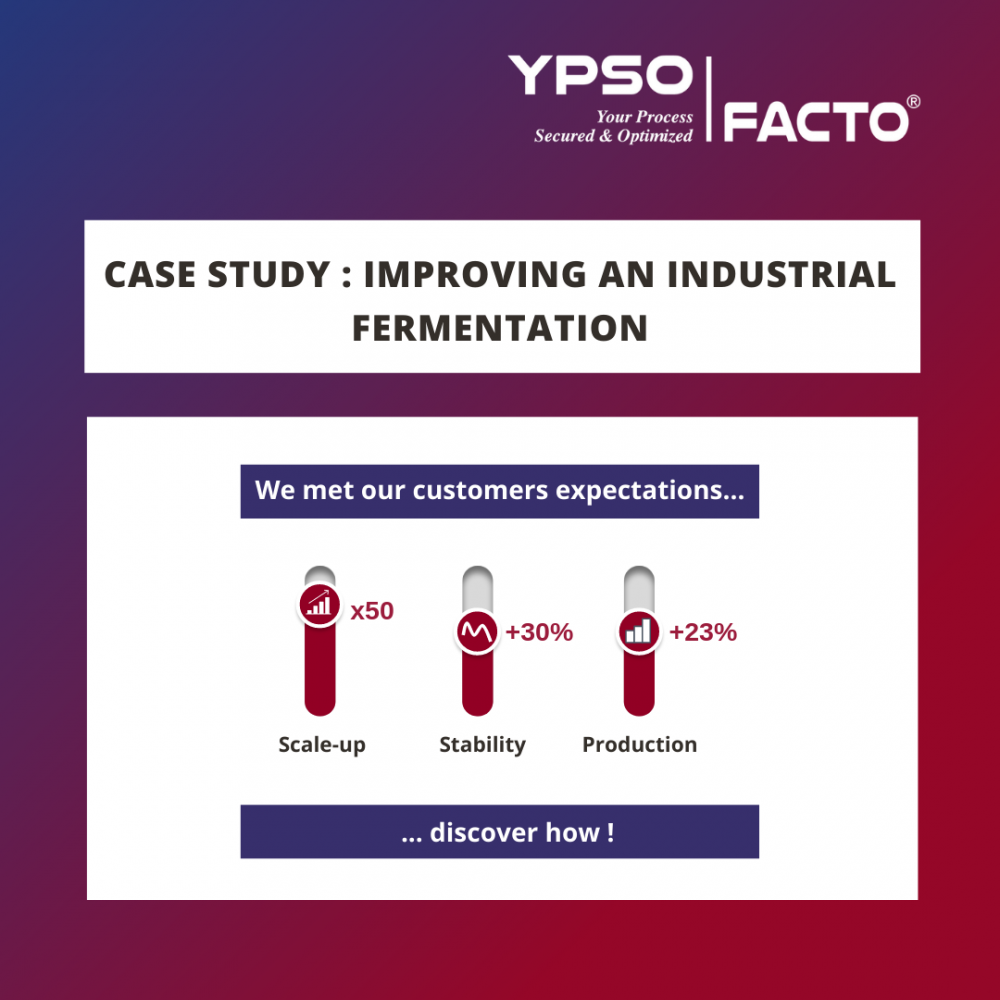
Challenge: Scale-up of an industrial fermentation process required improved productivity and greater process stability.
Methods:
- Establishment of mass balances and calculation of yields and Oxygen Uptake Rates.
- Identification of key process parameters influencing performance.
- On-site support during the production campaign to monitor and adjust operations.
Achievements:
- Definition of a new protocol at pilot scale to secure scale-up.
- Real-time corrective actions implemented to address process deviations.
- Significant improvement in overall process performance.
Key message: Combining process analysis with on-site expertise enables robust scale-up and improved productivity for complex fermentation processes.
Your questions, answered
No. Many improvements can be achieved through process expertise and targeted experiments. Modeling becomes essential when precise control, scale-up security, or significant performance gains are needed.
It provides a clear understanding of reaction pathways, mass and heat transfer, and phase equilibria. This allows prediction of yields, impurity formation, and safety risks without extensive trial-and-error.
Yes. Simulations can evaluate different reactor configurations, such as tubular or continuous stirred tank reactors, based on batch reactor data, and identify conditions that improve productivity and safety.
Typically, a small set of well-designed experiments is enough to calibrate a first model. The exact number depends on complexity and desired accuracy.
We have experience with nitration, esterification, enzymatic reactions, and fermentation, but our approach can be applied to any kind of process. Models can include reaction kinetics, thermodynamics, and transport phenomena.
Modeling translates directly into measurable business impact: improved yields, lower material costs, safer operations, and faster time-to-market. In some implementations, companies have realized productivity gains exceeding 50%, driving significant ROI.
Want to know more?
Don't hesitate to contact us!